


Searching for Alexander: Epic History in Northern Greece
The Epic of Alexander is one of the most evocative tales in human history. Its telling has launched conquerors, stimulated arts and enthralled listeners from Rome to Samarkand and beyond. In this voyage we will go in search of the truth of the tale and try to uncover the truth and reality of the story of Alexander, and the rise of the kingdom of Macedonia, from a mountain community of herdsmen to a colossus that bestrode the world.
The impact of the story can be seen through historical and archaeological sites, but also through the lens of cultural activities and we shall explore all of these. The impact of legend and heroic tales can be seen on later ages too and in the grand and rugged terrain of the lands of northern Greece we shall explore together their impact on the later worlds of medieval and modern Greece and those past travellers and adventurers who have gone in search of Alexander.
Authored and Led by
Oliver Gikes
Archaeologist, Guide, Mediterranean Heritage Specialist

Who is it for?
This journey is designed for the intellectually curious traveler who finds in history not a catalogue of dates and conquests, but a living drama of ambition, vision, and consequence. It will appeal most to those who have long been drawn to the ancient world — to readers of Arrian and Plutarch, to admirers of classical civilization, and to anyone who has ever wondered what it means for a single life to reshape the known world.
Tour Narrative Introduction
Far from the blue shores of the southern Aegean where Hellenic civilisation was born are the hills and mountains of Northern Greece and Macedonia. They occupy a unique and pivotal place in the annals of world history. The valleys and plains of this rugged region were home to a series of small kingdoms and tribal confederacies during the Bronze Age which formed a natural link between the developing Greek states of the south and the wider Balkans to the north and East. Prior to its ascendance, Macedonia was regarded by many Greek city-states as a peripheral kingdom, often dismissed as semi-barbaric. However, the region’s strategic location at the crossroads of Europe and Asia enabled it to absorb diverse influences, fostering a distinctive culture that blended Greek traditions with local customs.
A mythical origin story introduced the Argead Kings, noble refugees from Greek Argos to the south, who established a realm based on the central Macedonian Plain, and centred on what was to become the dynastic city of Aigai. While mythical these legends would stretch back into the tenth century BC. They claimed Greek descent, ruling over a population of indigenous Macedonians. These early kings struggled to maintain their independence faced with invasions from powerful sub kingdoms and Illyrian tribes. Nevertheless, monarchs such as Alexander I and Amyntas III managed to deal with the aftermath of the Persian invasions of the fifth century and the colonial expansion of Athens and other Polis which hedged the kingdom’s borders. Royal power was dependent upon maintaining the loyalty of the many sub units and tribal groups by positioning them amongst the officers of the realm, the King’s companions and council, positions in the army and by bringing up sons in the circle of the royal court.
Our journeys weave together three essential elements: the insight of world-class experts, a discreet layer of exclusive, behind-the-scenes experiences, and meaningful moments of connection with fellow travellers. This combination creates a richly textured program where learning, discovery, and shared enjoyment come together to form an unforgettable, multidimensional travel experience.
Key Location Insights
Alexander III, or Alexander the Great, was born in 356 BC at Pella, a new administrative capital founded to supplement the inconvenient ritual centre at Aigai. He benefited hugely form his father’s achievement and his early education, overseen by the renowned philosopher Aristotle, which imbued him with a profound appreciation for Greek culture, science, and literature. Aristotle encouraged Alexander to value enquiry, and pursue excellence, qualities that would shape his leadership and vision. From his father, Philip, he gained a model of kingship and military strategy, while his mother, Olympias, a princess from Molossia, one of the lesser kingdoms, claimed descent from Achilles and instilled in him a sense of destiny and divine purpose. These transformations in civilisation can be traced through the places and sites of Northern Greece: Thessalonica - The modern capital of northern Greece this great metropolis was founded in 315 BC by King Cassander, one of the Hellenistic monarchs who arose out of the empire building of Alexander. His new city was a model of new Hellenistic ideas and Macedonian success, so successful that it lasted through the Roman Empire, into the byzantine world of the Middle Ages and the Ottoman era as a hugely important political and cultural node. We will take the opportunity to visit its great monuments covering an imperial history and examine the cultural traditions of epic history. Amphipolis - A thorn in the side of early Macedonia restricting its expansion eastwards, Amphipolis was an Athenian colony. Its strategic position dominated rich silver mines and forests, important for maintaining Athenian hegemony. It was also a vital way point along the delicate jugular vein which linked Athans and its sources of grain in the Black Sea. Amphipolis was detached from Athens’ orbit following the Peloponnesian War and quickly dominated by Macedon, a primary cause of the final struggle between democracy and the dynastic autocracy championed by Macedonia. Pella - King Amyntas III founded Pella as a better centre for royal power. Originally it had a direct connection to the Thermic Gulf and the sea and lay upon a major east west road system. The city grew significantly as Macedonia’s power waxed being replanned on the latest Hellenistic principles. Its productive and commercial quarters were supplemented by substantial and elaborate aristocratic housing and one of the largest agorae in the Greek world. This in turn was dominated by a massive and ever expanding palace where Alexander was born in 356 BC. Aigai/Vergina - The first Macedonian capital was Aigai (literally ‘goats’). Here a very much open plan city was established, with different centres reflecting the clan-based foundations of Macedonian society, so different of that in Greece to the south. Aigai dominated the fertile Macedonian Plain but was vulnerable. The move of the business capital to Pella solved this issue, but Aigai remained vitally important as a dynamic centre, most especially the location of coronations, marriages and burials.

The Story in Images


Each program is imagined and curated through the guiding aspects of the signature CreaTour experience:
Exclusivity
Unique Access and Deep Local Knowledge, behind-the-scenes look
Seeking Authenticity
A genuine connection to a destination through meaningful interactions with local culture and communities
High Culture
The destination’s distinctive high culture elements - its theaters, concerts, performances, and artistic expressions
Signature Gatherings
Each CreaTour journey features a culturally inspired social event — from a Greek symposium to an Italian convivialità letteraria or Turkish meze — celebrating authentic connection and local spirit.
Wellness
With an emphasis on health and restoration, our journeys offer renewal rituals and mindfulness retreats or spaces—each inspired by the destination’s own traditions of well-being.
Accommodations
Handpicked boutique/heritage stays with a strong sense of place (former palaces, countryside villas, unique conversions), centrally located and chosen for quiet comfort and accessibility
Signature Experiences
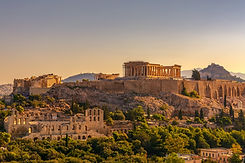
Private opening of the Acropolis Museum
I’m a paragraph. Double click
We ascend to the Acropolis for an exclusive private opening experience, entering this sacred site in the stillness of the early morning, before the city awakens. Bathed in soft light, the Parthenon and its surrounding monuments reveal Athens at the height of its golden age — a civilization marked by confidence, artistic brilliance, and bold political vision.

Symposium-style discussion around Aristotle
I’m a paragraph. Double click
me or click Edit Text. It's easy to make it your own.
we gather for lunch overlooking the Acropolis for a Symposium-style discussion around Aristotle. In conversation with a philosopher, we ask: Was Alexander merely the carrier of Aristotle’s vision or fundamentally a warrior shaped by his own ambition?
.
Athenian Figure pottery workshop
I’m a paragraph. Double click
In a workshop dedicated to Black- and Red-Figure pottery, we encounter one of Athens’ most sophisticated artistic techniques. Developed between the 7th and 4th centuries BCE, these painted vessels were narrative media. Myth, athletics, warfare, and civic life were encoded in clay and fire.

Greek farm-to-table experience
I’m a paragraph. Double click
me or click Edit Text. It's easy to make it your own.
I’m a paragraph. Double click
Enjoy an exclusive evening at a traditional puppet theatre, where you will privately attend a performance of the UNESCO-listed Opera dei Pupi. This cherished Sicilian art form, which flourished in the 19th century, brings to life the heroic tales of Charlemagne, his valiant knights, and the epic legends inspired by the Song of Roland and Ariosto’s poems. Through vivid storytelling, intricate craftsmanship, and centuries-old tradition, you’ll experience one of Sicily’s most captivating cultural treasures.


Ancient Greek Music Performance
I’m a paragraph. Double click
we gather at the Athens Concert Hall (Megaron Mousikis) for a performance that connects ancient and modern Greek cultural expression. Music becomes a bridge across centuries as a reminder that while political structures fall, cultural memory endures.

Ancient Macedonian Banquet
I’m a paragraph. Double click
me or click Edit Text. It's easy to make it your own.
An Ancient Macedonian banquet is reimagined in the spirit of aristocratic symposia, where ritual, storytelling, and refinement converge. Greek wines are poured in abundance as mythology comes alive around the table, framing the evening with meaning and symbolism. through carefully curated thematic performances, the atmosphere of a royal gathering is evoked — an immersive journey into a world of power, celebration, and cultural sophistication.
Complete the form below to express your interest in The Making of Rome. Our team will follow up personally to share further details, confirm availability, and guide you through the next steps.